
The 2,488-Carat Motswedi Diamond Has Been Sold: What This Historic Discovery Tells Us About the Diamond Market
By Vincent Spilotro, GIA Graduate Gemologist
Arezzo Jewelers | Elmwood Park, Illinois
Every once in a while, a diamond is discovered that makes even people who work with diamonds every day stop and stare.
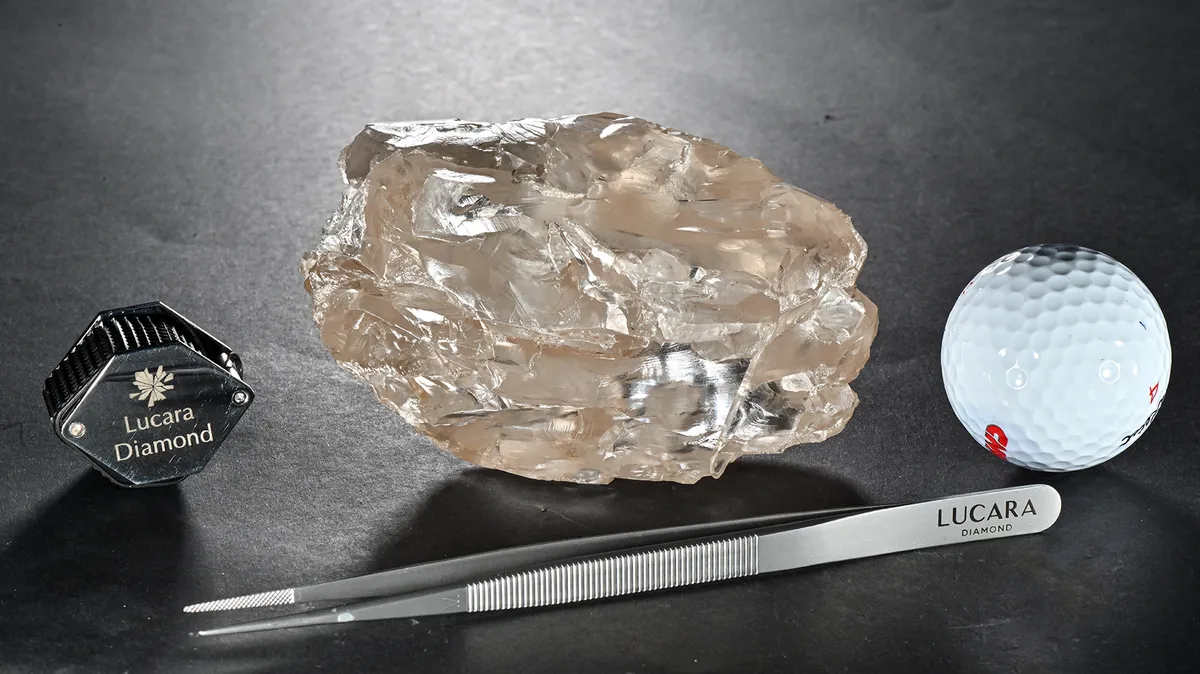
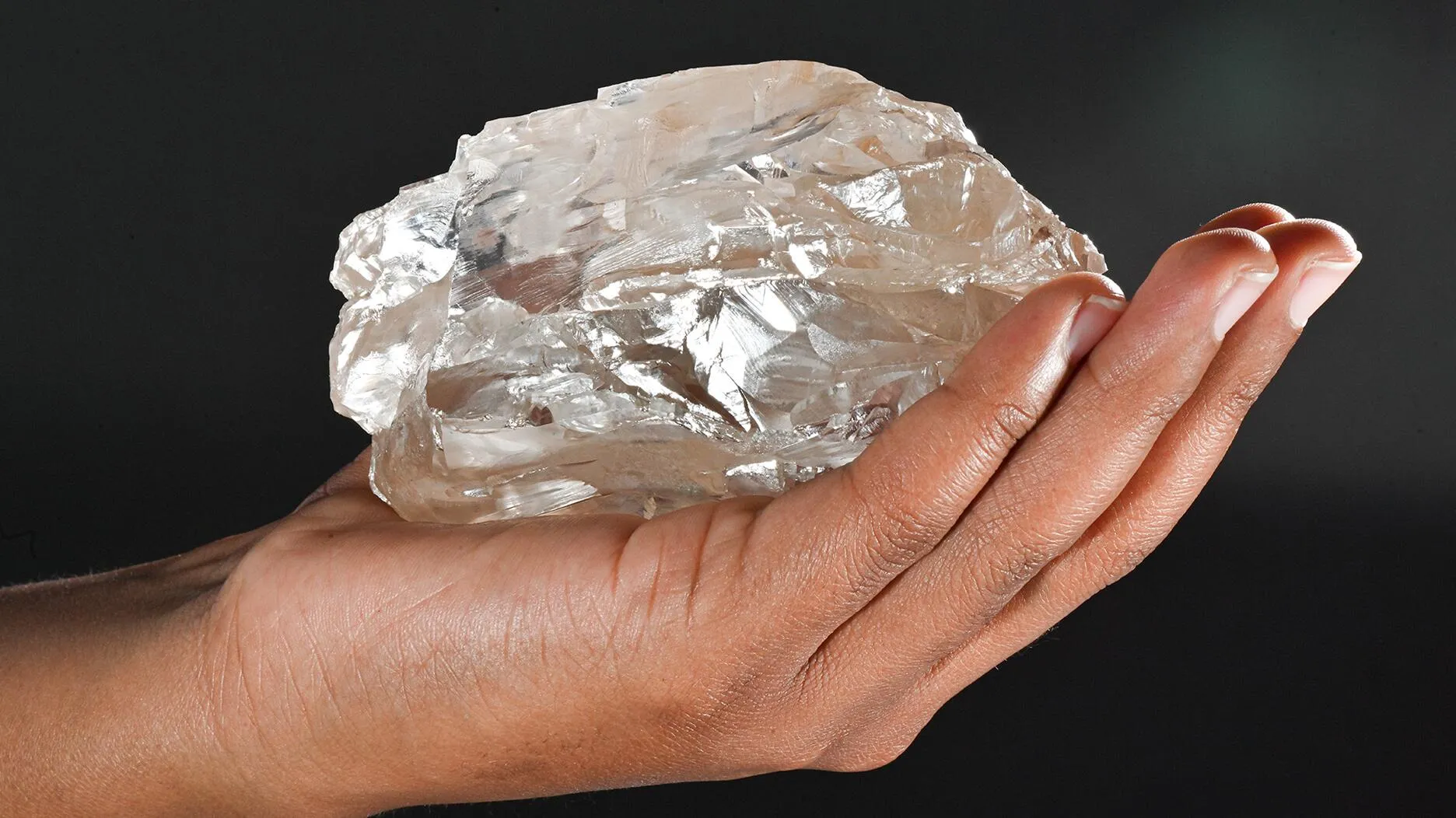
The 2,488-carat Motswedi diamond, recovered from Botswana’s Karowe mine, is one of those stones.
Lucara Diamond Corp. confirmed that Motswedi was sold during the second quarter of 2026. The buyer and purchase price have not been publicly disclosed. At 2,488 carats, it is believed to be the largest diamond ever discovered in Botswana and the second-largest gem-quality rough diamond ever recorded, surpassed only by the 3,106-carat Cullinan diamond discovered in South Africa in 1905.
As a Graduate Gemologist and jeweler who works with both natural and laboratory-grown diamonds every day, I think the most interesting part of this story isn't simply the size of the stone.
It is what Motswedi can teach us about rarity, diamond valuation, cutting, technology, provenance, and the rapidly changing natural-diamond market.
The Motswedi Diamond: Key Facts at a Glance
- Weight: 2,488 carats after cleaning
- Mine: Karowe Diamond Mine in Botswana
- Mining company: Lucara Diamond Corp.
- Discovered: August 2024
- Original reported weight: 2,492 carats
- Sold: During the second quarter of 2026
- Buyer: Not publicly disclosed
- Sale price: Not publicly disclosed
- Historical significance: Largest diamond believed to have been found in Botswana and second-largest gem-quality rough diamond in recorded history
The stone was originally announced at 2,492 carats, but after cleaning its recorded weight became 2,488 carats. A small reduction like this is not unusual when loose material and surface material are removed from an enormous piece of rough.
Read the original National Jeweler report
For some perspective, one metric carat equals 0.2 grams. That means Motswedi weighs approximately 497.6 grams—or about 1.1 pounds.
That is a half-kilogram diamond.
For someone accustomed to examining one-, two-, and three-carat diamonds under a microscope, that sentence takes a moment to process.
Why Is the Motswedi Diamond So Important?
Large diamonds are not simply regular diamonds scaled up.
Rarity increases dramatically with size.
GIA notes that, when quality is otherwise comparable, larger diamonds generally command higher values per carat precisely because increasingly large crystals become progressively rarer.
Learn more about diamond quality from GIA
But once you reach something like Motswedi, normal retail diamond comparisons become almost meaningless.
This isn't a 2,488-carat version of the diamond in someone's engagement ring.
It is a unique geological specimen.
At this level, value is influenced not only by carat weight, but by the internal structure of the rough, transparency, color, inclusions, potential polished yield, possible finished diamond sizes and shapes, historical importance, provenance, and ultimately what a very small number of capable buyers are willing to pay for it.
That is one reason I would caution against trying to estimate Motswedi's value by simply applying a price-per-carat figure.
Exceptional rough diamonds have to be valued by what they can potentially become.
How Do You Put a Price on a 2,488-Carat Rough Diamond?
This is where diamond valuation becomes fascinating.
When I evaluate a polished diamond for a client, we can discuss familiar factors such as the 4Cs: cut, color, clarity, and carat weight.
A rough diamond is different.
There is no finished cut yet. There is no final polished carat weight. And inclusions that appear problematic in the rough may be removable—or they may dictate the entire cutting plan.
The real question becomes:
What collection of polished diamonds can potentially be produced from this piece of rough, and what will those diamonds ultimately be worth?
Diamond planners analyze the crystal to determine how it can be divided while maximizing value. Depending on the location of inclusions, strain, cleavage planes, crystal shape and other characteristics, preserving maximum weight may not always produce maximum value.
Sometimes removing additional material can produce a smaller diamond with dramatically better clarity or appearance.
GIA has documented how sophisticated diamond planning is used to determine the shapes and positions of polished diamonds within a piece of rough, balancing potential yield against the need to avoid inclusions that could reduce value.
Read more about diamond planning from GIA
With a stone this important, every decision matters.
A fraction of a percentage in potential yield could represent dozens of carats.
There are diamond-cutting decisions—and then there are decisions where a single saw or laser operation could affect millions of dollars in potential value.
The Technology That Helped Preserve Motswedi
Another part of this story deserves more attention: finding a giant diamond is only useful if you can recover it without destroying it.
Lucara said Motswedi was recovered using its Mega Diamond Recovery X-ray Transmission technology, installed at the Karowe mine specifically to identify and preserve large, high-value diamonds during processing.
Read Lucara Diamond Corp.'s announcement
This matters because diamond mining involves processing tremendous quantities of rock.
Historically, aggressive crushing during recovery could potentially damage large crystals before anyone even realized they were there.
Technology that can recognize unusually large diamonds earlier in the recovery process changes that equation.
In other words, Motswedi isn't only a story about geology.
It is also a story about what happens when modern engineering gets better at protecting what geology created.
And Karowe has developed an extraordinary track record.
The mine has also produced the 1,109-carat Lesedi La Rona, the 1,758-carat Sewelô, the 1,094-carat Seriti, and several other diamonds weighing more than 1,000 carats.
At some point, finding giant diamonds there starts feeling slightly less like luck and slightly more like Karowe showing off.
Why Is It Called “Motswedi”?
The name carries significance as well.
Lucara invited Botswana citizens and residents to participate in a national naming competition. More than 39,000 entries were submitted.
The winning name, Motswedi, is a Setswana word referring to a spring or underground water emerging to the surface—a source associated with life and vitality.
Read about the naming of the Motswedi diamond
I think provenance matters increasingly in the modern jewelry industry.
Consumers want to know more than carat weight and clarity. They want to understand where something came from, how it was created, and what story it carries.
Few diamonds will ever possess provenance comparable to this one.
Motswedi has a name, a birthplace, a historical context and an identity before a cutter has even placed the first facet on it.
What the Motswedi Sale Says About the Natural Diamond Market in 2026
This may actually be the most important part of the story for the diamond industry.
Lucara reported $41 million in revenue for the second quarter of 2026, down approximately 6 percent from the same quarter the previous year, despite the quarter including the sale of Motswedi.
The company has described the natural-diamond market as showing characteristics of a K-shaped recovery: larger, higher-quality diamonds have demonstrated greater resilience while smaller and lower-quality rough has faced more pressure.
Read Lucara Diamond Corp.'s Q2 2026 results
That distinction matters.
There isn't really one single “diamond market.”
There are multiple diamond markets operating simultaneously.
The buyer considering a one-carat engagement diamond, the collector purchasing an exceptional 20-carat natural diamond, the consumer choosing a five-carat laboratory-grown diamond, and the organization purchasing one of the largest pieces of rough ever discovered are participating in fundamentally different segments.
Their motivations are different.
And increasingly, their economics are different.
Natural Diamonds and Lab-Grown Diamonds Are Moving Into Different Lanes
I work with both natural and laboratory-grown diamonds, and one of the biggest mistakes I see in discussions about the diamond industry is the assumption that one category has to somehow eliminate the other.
They solve different problems.
Laboratory-grown diamonds have essentially the same fundamental chemical, physical and optical properties as their natural counterparts, while allowing consumers to purchase considerably larger visual size at price points that would be difficult to achieve with comparable natural diamonds.
GIA recognizes laboratory-grown diamonds as diamonds while distinguishing their laboratory origin from natural material.
Read GIA's laboratory-grown diamond update
Natural diamonds increasingly have a different story.
Their appeal is tied to geological origin, scarcity, provenance and the fact that nature cannot simply increase production because demand increases.
Motswedi represents the extreme end of that concept.
Could technology grow a very large diamond crystal?
Technology will continue advancing.
But nobody can order another Motswedi from Botswana.
There is only one.
That distinction between diamond as material and diamond as rare natural object is going to become increasingly important in how jewelers explain natural and laboratory-grown diamonds to consumers.
Neither answer is automatically right for everyone.
My job as a gemologist isn't to tell someone which category they are supposed to appreciate.
It is to make sure they understand what they are buying—and why it has the value it does.
Will the Motswedi Diamond Be Cut?
Almost certainly, the most fascinating chapter of Motswedi's story is still ahead of us, although the new owner has not publicly disclosed plans for the stone.
Turning rough of this magnitude into finished diamonds could require extensive scanning, modeling and planning before any irreversible decision is made.
The goal may not necessarily be to create the single largest polished diamond possible.
A cutter could potentially produce multiple historically significant diamonds instead.
That decision will depend on the internal architecture of the crystal.
Where are the inclusions?
Where are the safest separation planes?
Which orientations offer the best color?
How much weight can be preserved?
Would one extraordinary stone be more valuable than several exceptional stones?
These are the kinds of questions diamond cutters and planners have to answer before the public ever sees a finished gem.
For comparison, GIA research has documented how cutters working with significant pieces of rough carefully plan around inclusions and sometimes produce collections of remarkably high-quality polished diamonds from a single crystal.
Motswedi could eventually become one famous diamond.
It could become several.
Or its owner could choose to preserve the rough in some form because of its historical significance.
Until more information is released, anything beyond that is speculation.
And with diamonds, knowing where the facts end and speculation begins is important.
What Can an Engagement-Ring Buyer Learn From a 2,488-Carat Diamond?
Believe it or not, there is a lesson here for someone shopping for a two-carat engagement ring.
Carat weight never tells the entire story.
Two diamonds can have identical weights and dramatically different values because of differences in color, clarity, proportions, cut quality and rarity.
Learn more about diamond quality factors from GIA
That principle exists whether we are talking about 1.50 carats or 2,488 carats.
When I sit down with a client selecting a diamond, I don't want them simply chasing a number on a grading report.
I want them to understand the diamond.
How does it perform visually?
Where are the inclusions?
Are we paying for characteristics we can actually appreciate?
Does the cut make efficient use of the weight?
Would slightly changing color, clarity or carat weight create a better-looking diamond for the same budget?
A grading report gives us important information.
Gemological expertise helps interpret that information.
That distinction is one of the reasons I believe buying an important diamond should still involve an experienced human being.
My Take as a Graduate Gemologist
I've spent much of my career looking at diamonds through a loupe, microscope and computer screen.
Eventually, numbers can become surprisingly normal.
One carat.
Two carats.
Five carats.
Every now and then, though, something reminds you how extraordinary diamonds actually are.
Motswedi is one of those reminders.
Nearly half a kilogram of diamond crystal survived its journey from deep within the Earth, reached the surface, survived mining and processing, was recognized by sophisticated recovery equipment, and was preserved as one of the largest gem-quality rough diamonds humans have ever discovered.
That's remarkable before anyone polishes a single facet.
And during a period when the diamond industry is changing rapidly, I think stones like Motswedi highlight something important:
The future of the diamond business will require us to talk about value more intelligently.
Not every natural diamond is extraordinarily rare simply because it is natural.
Not every laboratory-grown diamond is interchangeable simply because it was grown in a laboratory.
Quality matters.
Rarity matters.
Origin matters.
Cutting matters.
Price matters.
And most importantly, what the buyer values matters.
That's the conversation good jewelers should be having with their clients.
Frequently Asked Questions About the Motswedi Diamond
What is the Motswedi diamond?
Motswedi is a 2,488-carat rough natural diamond recovered from the Karowe Diamond Mine in Botswana by Lucara Diamond Corp. It is believed to be the largest diamond ever discovered in Botswana and the second-largest gem-quality rough diamond recorded in history.
How big is the Motswedi diamond?
Motswedi weighs 2,488 carats, equivalent to approximately 497.6 grams or roughly 1.1 pounds.
Why was the diamond originally reported as 2,492 carats?
When Lucara announced the discovery in August 2024, the rough diamond weighed approximately 2,492 carats. After cleaning, its recorded weight was 2,488 carats.
Is Motswedi the largest diamond ever found?
No. The 3,106-carat Cullinan diamond, discovered in South Africa in 1905, remains larger. Motswedi is considered the second-largest gem-quality rough diamond recorded and the largest believed to have been discovered in Botswana.
Who bought the Motswedi diamond?
Lucara confirmed that Motswedi was sold during the second quarter of 2026, but the company has not publicly identified the buyer.
How much did the Motswedi diamond sell for?
The purchase price has not been publicly disclosed.
Where was the Motswedi diamond found?
Motswedi was recovered from Lucara Diamond Corp.'s Karowe Diamond Mine in Botswana. Karowe has become internationally known for producing unusually large, high-value rough diamonds.
What happens to a giant rough diamond after it is sold?
The owner may have the diamond extensively scanned and analyzed before deciding how—or whether—to divide and polish it. Cutters attempt to balance polished weight, clarity, color, shape and overall value. With an historically important rough diamond, planning can be extraordinarily complex.
Diamond Expertise in the Chicago Area
Stories like Motswedi are exciting because they show just how deep the science, craftsmanship and history of diamonds really go.
Fortunately, you don't need a 2,488-carat budget to benefit from the same principles of gemology.
At Arezzo Jewelers in Elmwood Park, Illinois, I work directly with clients throughout Chicago and the surrounding suburbs to compare natural and laboratory-grown diamonds, understand grading reports, evaluate diamond quality, and create custom engagement rings designed around the individual stone.
Whether you're comparing your first diamond or looking for something truly exceptional, my goal is the same:
Understand what you're buying before deciding what it's worth to you.
Because the best diamond isn't necessarily the biggest diamond.
Although at 2,488 carats, Motswedi certainly makes a convincing counterargument.
Sources
This article incorporates reporting from National Jeweler regarding the 2026 sale of the Motswedi diamond, official announcements and financial reporting from Lucara Diamond Corp., and educational and gemological resources published by the Gemological Institute of America (GIA). Analysis and commentary are original to Vincent Spilotro and Arezzo Jewelers.